
SDA Certification and Report
We service SDA Australia wide, though, the majority of the work is a desktop audit performed by Gary Finn, who enjoys seeing the world, armed with an ipad and a great camera.
Sydney Access Consultants offer two branches of service in the SDA space.
Firstly, as architects who have worked in the design of homes for people who live with disabilities for around 40 years, we can offer very specific design and development advice targeting your successful venture into SDA. However, the majority of our clients are architects for whom we work directly as Access Consultants and SDA certifiers without competing interests, and for the best SDA outcomes, a diversity in design approach is essential.
Obviously as SDA assessors, the second branch of service involves working with your architect to project the required SDA certifications necessary for your SDA development to be enrolled with the NDIS program. Simple probity requires that we cannot perform both of these service branches on any specific development.
For SDA certification, the subject of this article, please advise the category and type of SDA you wish to register so that we can point our advice to that outcome. If you have building plans and haven't already done so, then please send them now.
SDA Assessments
There are two certification components. Firstly, an assessment of the SDA Design as shown on your Construction drawings. Finally an assessment of the dwelling on completion.
Design Stage Certification
When complying plans are finalised by your architect, an SDA certificate is issued, for each dwelling. Our proposed fee, is derived on a per examination certificate basis. However, we will guide the design with appropriate feedback annotated on your plans to ensure the certification process meets its objectives and your architect can quickly resolve the design of any outstanding matters. With competent professionals at your side this process typically entails one review with plan mark ups, and a following certificate upon receipt of your complying design.
As Built Stage Certification
There is a second round of certification processes required at "as built" stage, one certificate for each dwelling. We are aware that having four different standards, with their own nuances, many tradesmen have developed a poor understanding of hte standards because they may have had experience with one type, but not necessarily the classification of SDA you are developing. There seems to be a lot of misinformation out there from in-experienced "experts" involved in middle management, and all of these circumstances lead to a profusion of very "loose facts" when it comes to the onsite reviews we have conducted since the inception of SDA.
As an experienced project manager for State and Federal Government projects and a licensed builder in NSW, the principal architect is available on the phone to field questions [RFI] that typically arise during construction, and we have developed a number of cheat sheets to issue to your builder for its subcontractors, to help eliminate the most costly co-ordination issues, errors and omissions. These "trade notes" minimise the number of site visits that would be necessary to ensure satisfactory SDA certification at "as built" stage.
Still, it is prudent to get an inspection by the SDA certifier prior to installing internal linings, to reduce the potential nuisance of a millimetre tolerance issue, that would prevent release of the as built certificates. When an interim site inspection is required, a site visit is scheduled for a fixed fee agreed in advance.
Then, on completion, a final inspection is conducted to prepare the certificates required by the NDIS. If work is incomplete, further inspections are required until all the errors and omissions have been addressed. Re-inspections incur additional costs, which can be overwhelming for remote sites, so we will agree a fee in advance, and we take every precaution and delight, in conducting just one final inspection, feeling chuffed that our RFI service and "trade notes" have worked a treat. The SDA certificates are independent of your Building's occupancy certificates, though, often the inspections are conducted concurrently by the differing professionals.
Finally, prior to release of the As built Certificate there are a few housekeeping matters that need to be provided for the record. These are basic but critical and could be provided to us prior to the "as built" inspection:
- Emergency evacuation plan shall be provided to the occupier or their 24.2 supports, which may include a path of travel to a safe place.
- As evidenced by documentation provided by instructing party and held on file, are Density Rules met?
- Letter of confirmation from Builder in regard to provision of at least the following:
- Slip resistance to all areas as required by the SDA Design Standard.
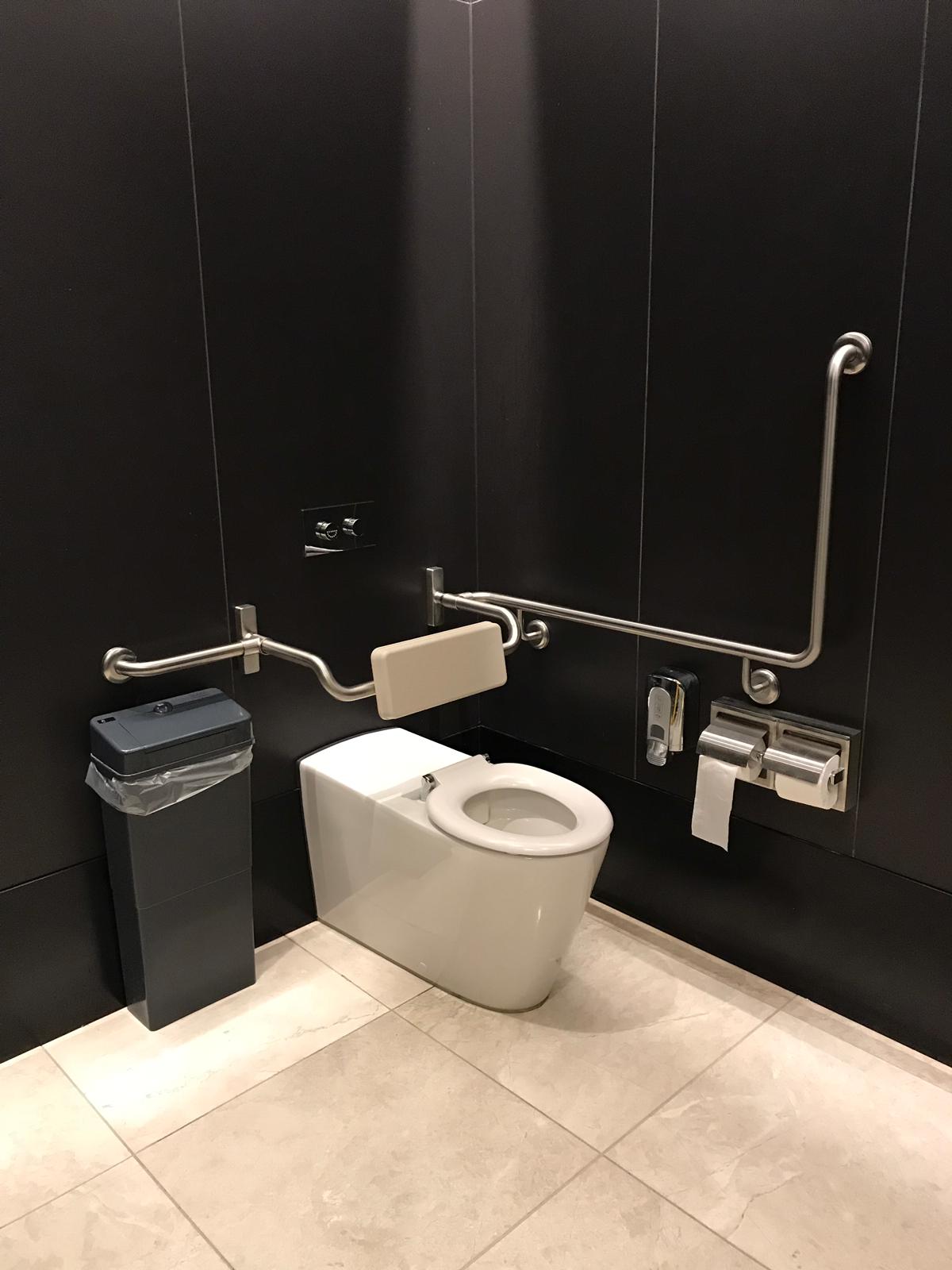
Applies to all design categories. - All sanitary compartments have walls either constructed of masonry or concrete or been provided with wall reinforcement of minimum 12mm thick sheeting from FFL and extending to a height of minimum 2100mm from FFL.
Applies to all design categories. - Carpets if provided have a pile height or thickness of not more than 11mm and carpet backing not more than 4mm.
Applies to all design categories. - Where ducted air-conditioning is provided, zoning of habitable rooms is provided.
Applies only to Fully Accessible and High Physical Support design categories. - Internet connection has been provided with ability for high speed internet speed and wifi coverage achievable throughout the house.
Applies only to Fully Accessible and High Physical Support design categories. - Resilient materials including high impact wall linings have been provided, participant’s bedrooms have been provided with sound insulation and high impact / vandal proof fittings and fixtures have been provided.
Applies only to Robust design category. - Certification is provided from a Qualified, Insured and Practicing Structural Engineer that states that the participant’s bedroom has been inspected and have been provided with power and inbuilt structure capable of installation of a minimum 250kg load capacity, constant charge ceiling hoist which is capable of going across the bed and down the bed.
Applies only to High Physical Support design category. - Certification is provided from an electrician or builder to confirm that emergency power solutions are provided to cater for a minimum 2 hour outage in no less than 2 GPOs in bedrooms and any provided automated doors used for entry and egress.
Applies only to High Physical Support design category.
- Slip resistance to all areas as required by the SDA Design Standard.
Existing Houses
If you intend to convert an existing dwelling for use as SDA, our observations are that the NDIS currently discourage the concept. It does so, by either requiring a recent Occupancy Certificate from a Building Certifier, or, by introducing an exorbitant minimum expenditure on renovations costs which must be proven. Please refer to the current NDIS SDA Pricing and Payments Guides available on the NDIS website.
If you think your proposed project in could do with an SDA Assessment and Certification, please call at your convenience to get the ball rolling.
As you are aware, the NDIS is being carried out across the country to more than 600,000 Australians who live with disabilities. It has been a learning curve for us all, but particular patterns of development have emerged. We highly recommend that you consider introducing housing diversity, rather than resorting to the corridor down the middle of a row of bedrooms design, as it is obvious that participants will, like you, choose to reside in a home that they feel is their forever home. Ask yourself "Would I live here?"
Our objective in preparing the report is to assist you to register your housing for SDA in the category that best suits your plans, or existing building, as the case may be.
There are several categories of home for registration under NDIS as SDA. These are:
New Builds:
- Improved livability
- Fully Accessible
- Robust
- High Physical Support
Existing Stock:
- Basic
- Improved livability
- Fully Accessible
- Robust
- High Physical Support
Legacy:
- Basic
- Improved livability
- Fully Accessible
- Robust
- High Physical Support
The majority of SDA will be registered in new builds category, as the existing stock and legacy categories are for dwellings that were occupied, often loong before the introduction of the NDIS.
Additional funding is provided for Onsite Overnight Assistance; break out rooms (robust category home only) and for Fire Sprinklers.
Each of the nominated categories above have specific inclusion requirements to enable them to be registered.
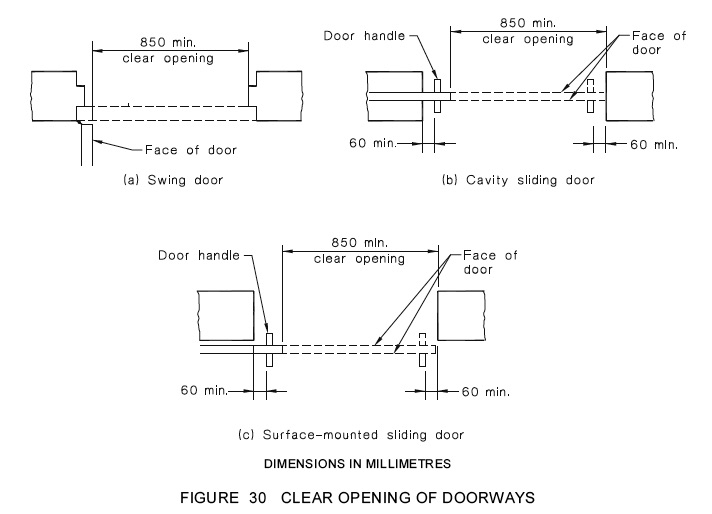
With respect to the SDA Standard, these requirements are mandatory and unwavering. It is pass or fail with no discretion for millimetre errors and building tolerances. Your architect is encouraged not to try and achieve the minimum, because your builder is using materials that are never perfect or precise.
Each SDA design category has its own additional requirements which we can advise on. Also, we have prepared trade by trade guide notes for the builder to issue to his team, so that they understand what is important in achiving certification for their trade, in the class of building you nominate.
There is also a limit on the number of SDA recipients that can reside on each alotment of land, which we can direct you to, via the SDA Rules.
SDA Assessment Report.
We will provide this type of report, which is a study that examines your designs and will provide information to help you to proceed with your project towards enrolment on completion. It includes a Certificate if we have received plans demonstrating compliance with the SDA Design Standards for the category in which you seek enrolment.
This Report is not intended to provide a guarantee because there is no certainty surrounding the requirements for registration of SDA homes, by reason that, the rules are still being developed by the NDIA.
When you have provided complying documents I issue a certificate to you to assist you in enrolling the dwelling for SDA, and I will also issue the Certificate and your documents, as well as the NDIS checklist to the NDIS for their records.
What is included in this Report
This Assessment process will assess your plans against your nominated category of SDA and provide advice on the additional measures required to satisfy the current requirements for enrolment under NDIS as SDA, as outlined in the current relevant documents published by NDIA. Where appropriate, we will issue a certificate demonstrating compliance with the SDA Standards.
The following are specifically not included in this Report:
The registration/enrolment process for NDIS SDA housing.
GENERAL TERMS & CONDITIONS
Available upon application.
Please call at your convenience on 0295863111
Kind regards
Gary Finn
0414414101
(Cert iv Access Consulting)
Architect Principal #5774 (NSW)
Builder #51908C (NSW)
Access Consultant #435
Principal Design Practitioner #PDP0000496
SDA Accredited Assessor #SDA00039
Sydney Access Consultants
http://www.sydneyaccessconsultants.com.au
Shop 7/438 Forest Road, Hurstville NSW 2220
Phone (02) 95863111 Mobile 0414 414101
*Member of Master Builder's Association;
*Accredited member of the Association of Consultants in Access, Australia
*Member of Association of Consulting Architects, Australia